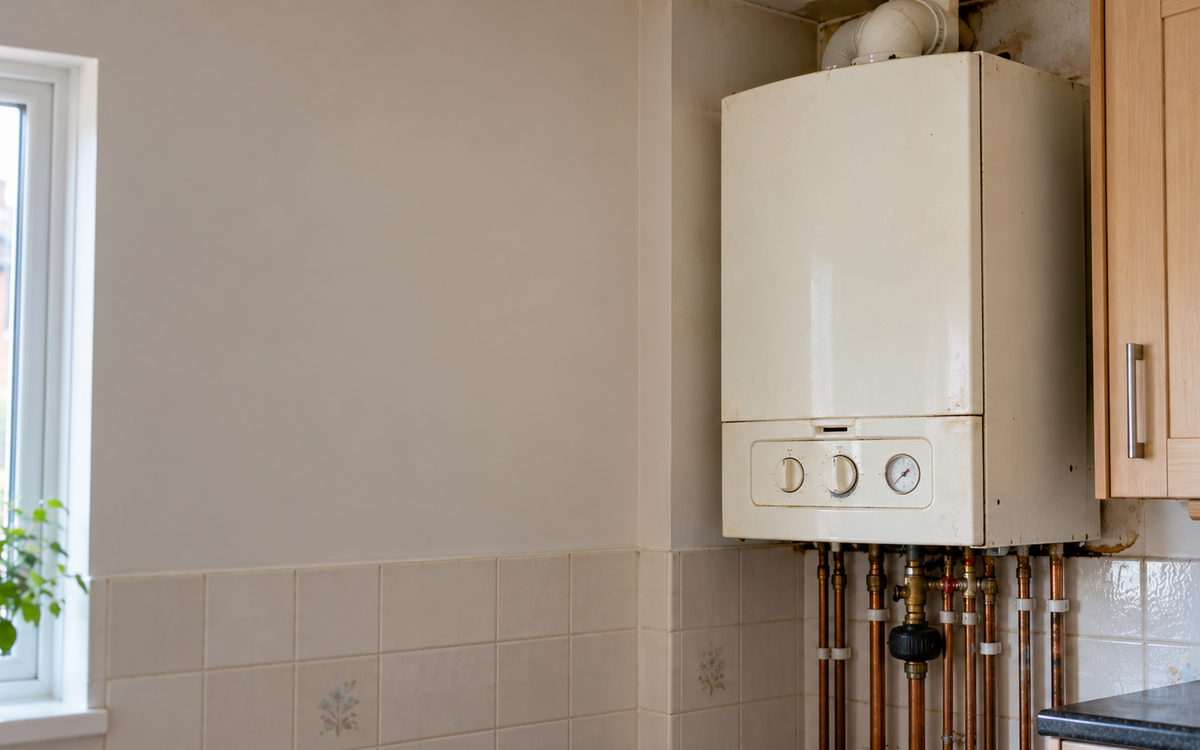
People often ask what a homebuyer plumbing inspection actually finds. So here’s a real one, photo by photo. The buyer’s surveyor had recommended a closer look at the plumbing, and the buyer found us online and booked a plumbing inspection. This is what our engineer found in a single visit, most of it out of sight from the room. It’s also why we’d recommend an inspection whatever your survey says: none of this was visible on a walk round.
The kitchen: a tap that’s past its best
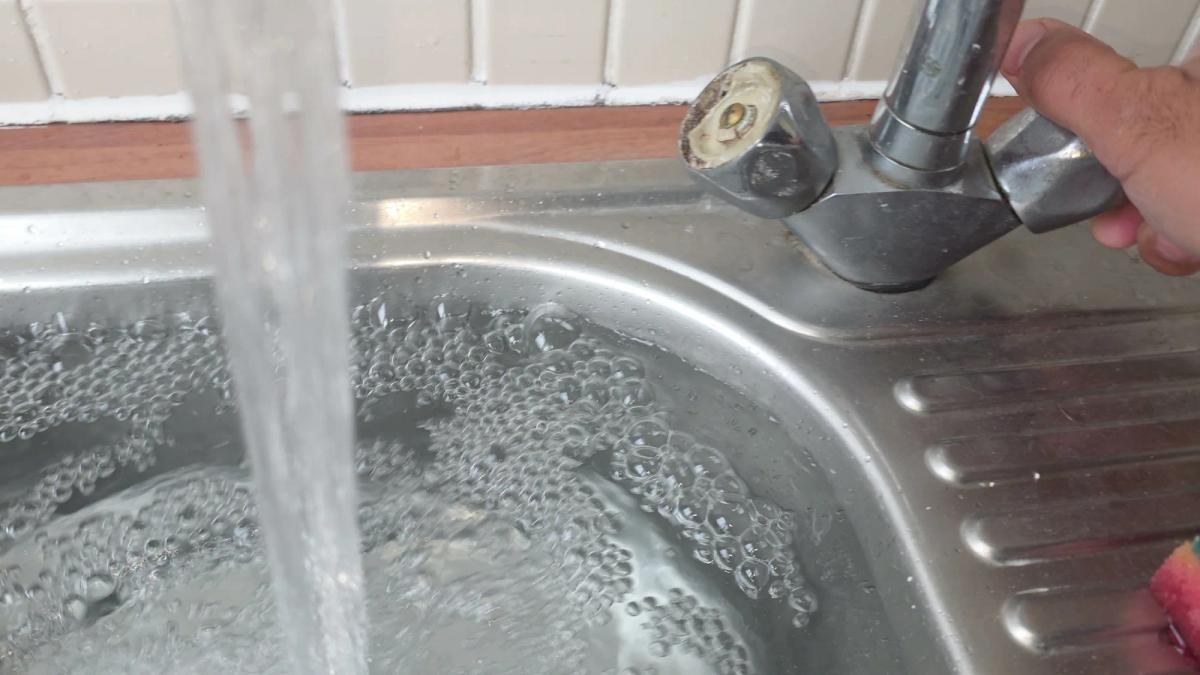
We start by running every tap, then filling and draining each sink to check the flow and the drainage. The kitchen tap worked, but the cap was missing from the hot handle, the inside was worn and the base was corroded where it meets the sink. It’ll need replacing soon.
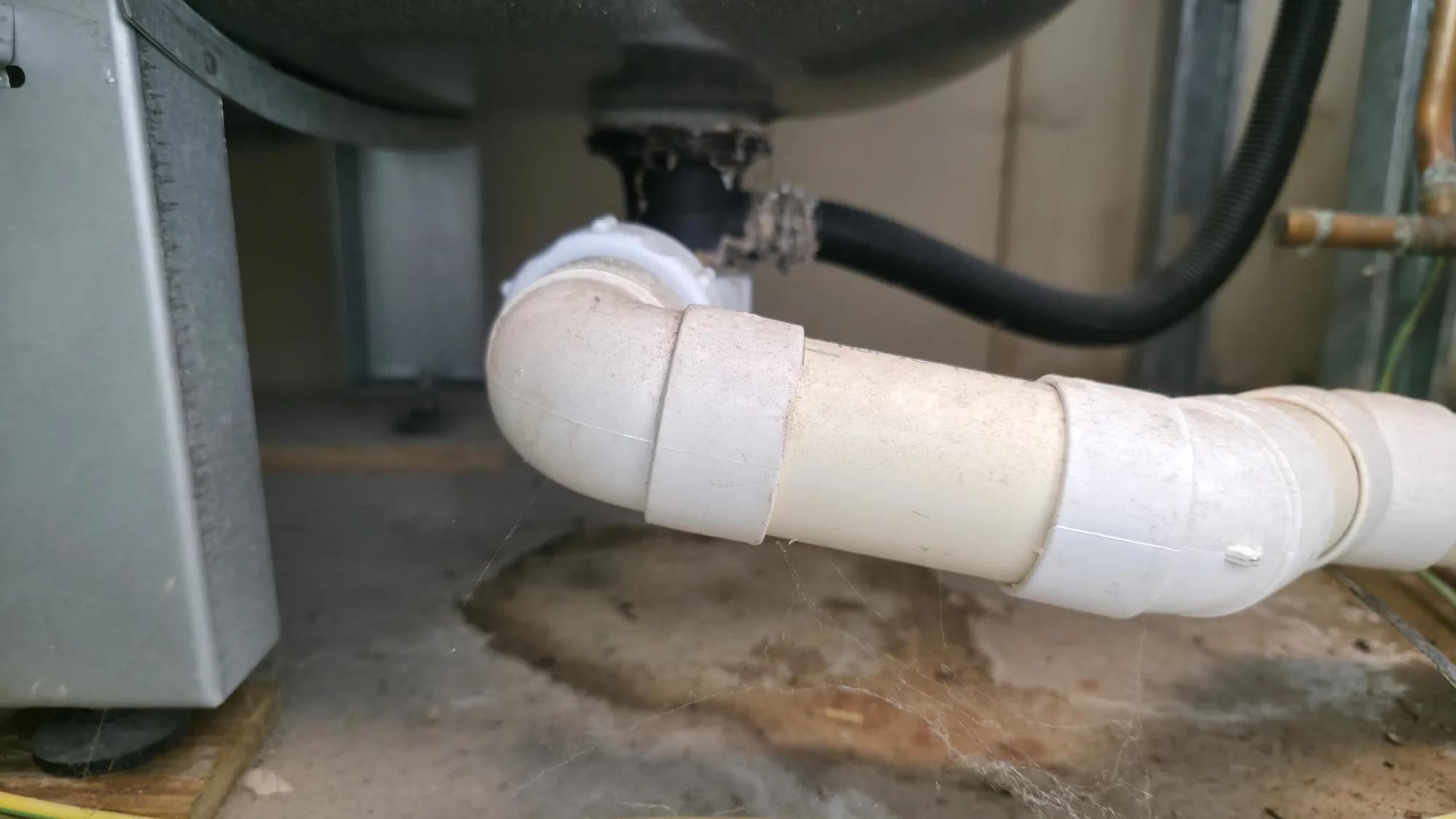
The clue in the wrong place
This is the kind of thing a buyer would never see. Under a sink, our engineer noticed a water mark on the floor. The sink was up there, so why were the marks down here? Lifting the worktop, which was designed to come off, showed the answer: the joint between the sink and the waste pipe had been wrapped in tape that had perished, and water had been escaping onto the floor for some time. Nobody living there would have known.

A leaking sink waste is a cheap fix when it’s found early. Left alone, it rots the floor and cabinets underneath and can bring down a ceiling below.
The bathroom: sealant, grout and a gap at the bath panel
In the bathroom, the grout had cracked and the sealant was failing where the wall tiles meet the bath. Water gets through gaps like these every time someone showers. There was mould along the sealant at the basin too, and the bath panel had a gap opening along its top edge, with dark marks on the floor beside it.

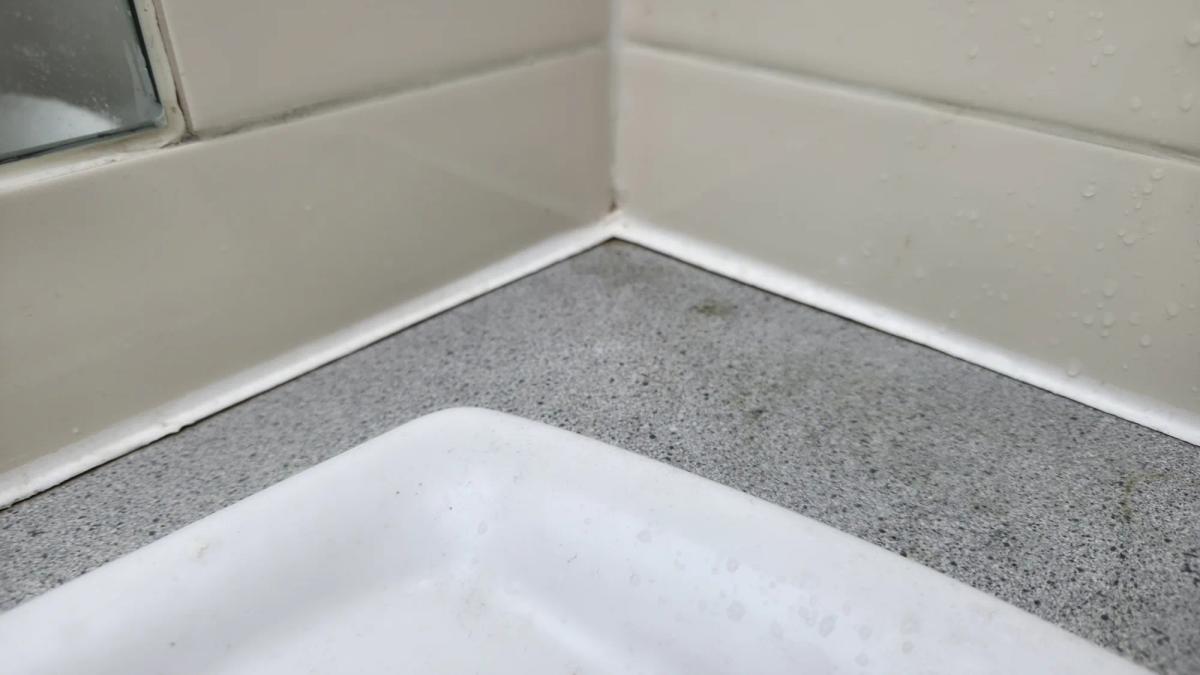
Resealing is a small job on its own, but failed sealant is how many of the hidden leaks we find get started.
Behind the boxing: a hidden leak
The toilet was a back-to-wall type, with the cistern and pipework hidden inside a boxed-in frame of plywood. Through the access points, with a torch, our engineer found dried water trails running down the flush pipe from the cistern, and staining down the back of the toilet pan around its connector. That’s the sign of an old leak, or one that only runs now and then, such as when the toilet is flushed.

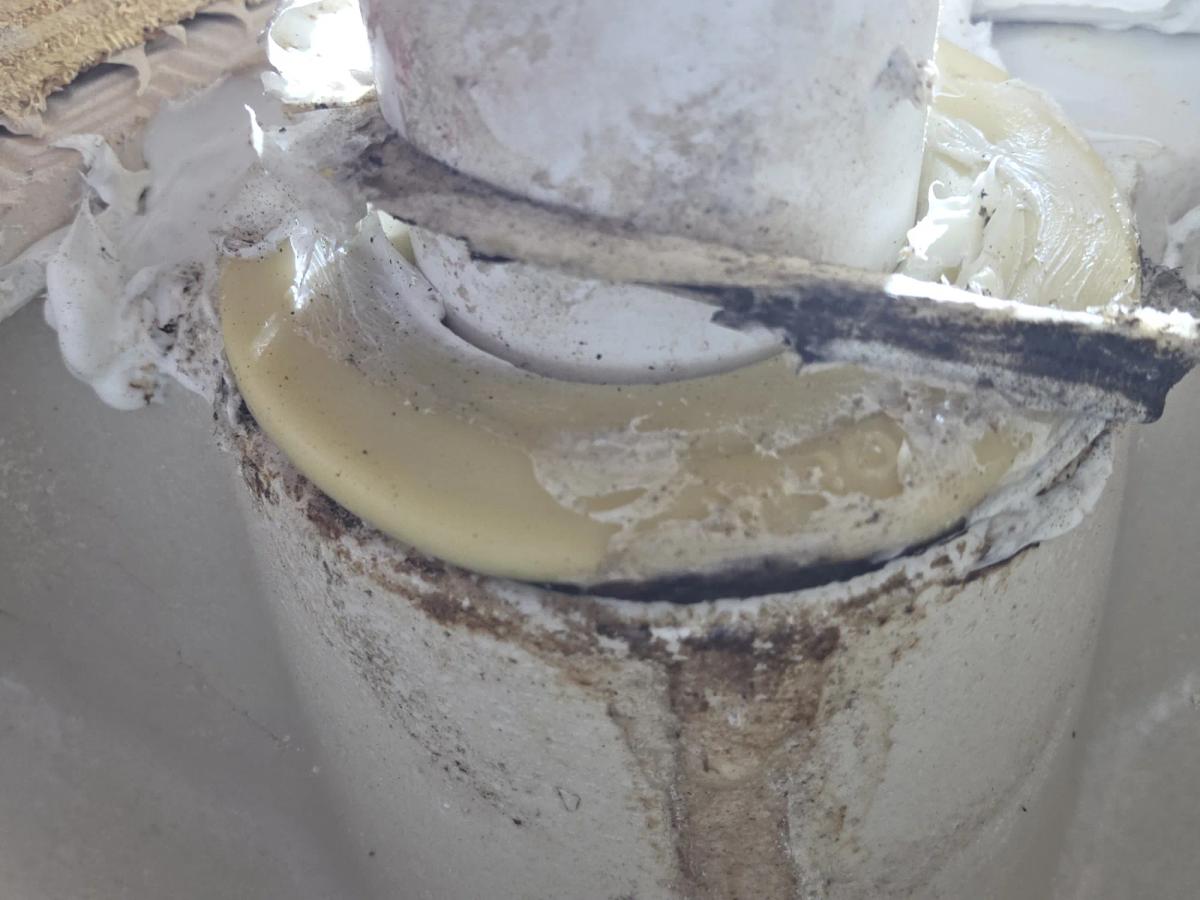
A leaking toilet pan connector or flush pipe behind boxing can soak the floor for months before anyone notices. Finding it before you buy means it can be fixed properly, and the cost can be part of your conversation with the seller.
The hot water cylinder: what we couldn’t test
The home had an unvented hot water cylinder, which needs its safety valves and controls checking. On the day, the electricity was off at the property, so we couldn’t heat the water or test the cylinder. We checked what we could see and noted it in the report, so the buyer knew to arrange a second visit.

What the buyer got
After the visit, the buyer had a written report with photos of everything above and what needs doing. Most of it was small on its own. Together, it’s work a buyer would rather know about before exchanging contracts, not after. Here’s part of a report like the one the buyer received, with their details and the prices hidden.
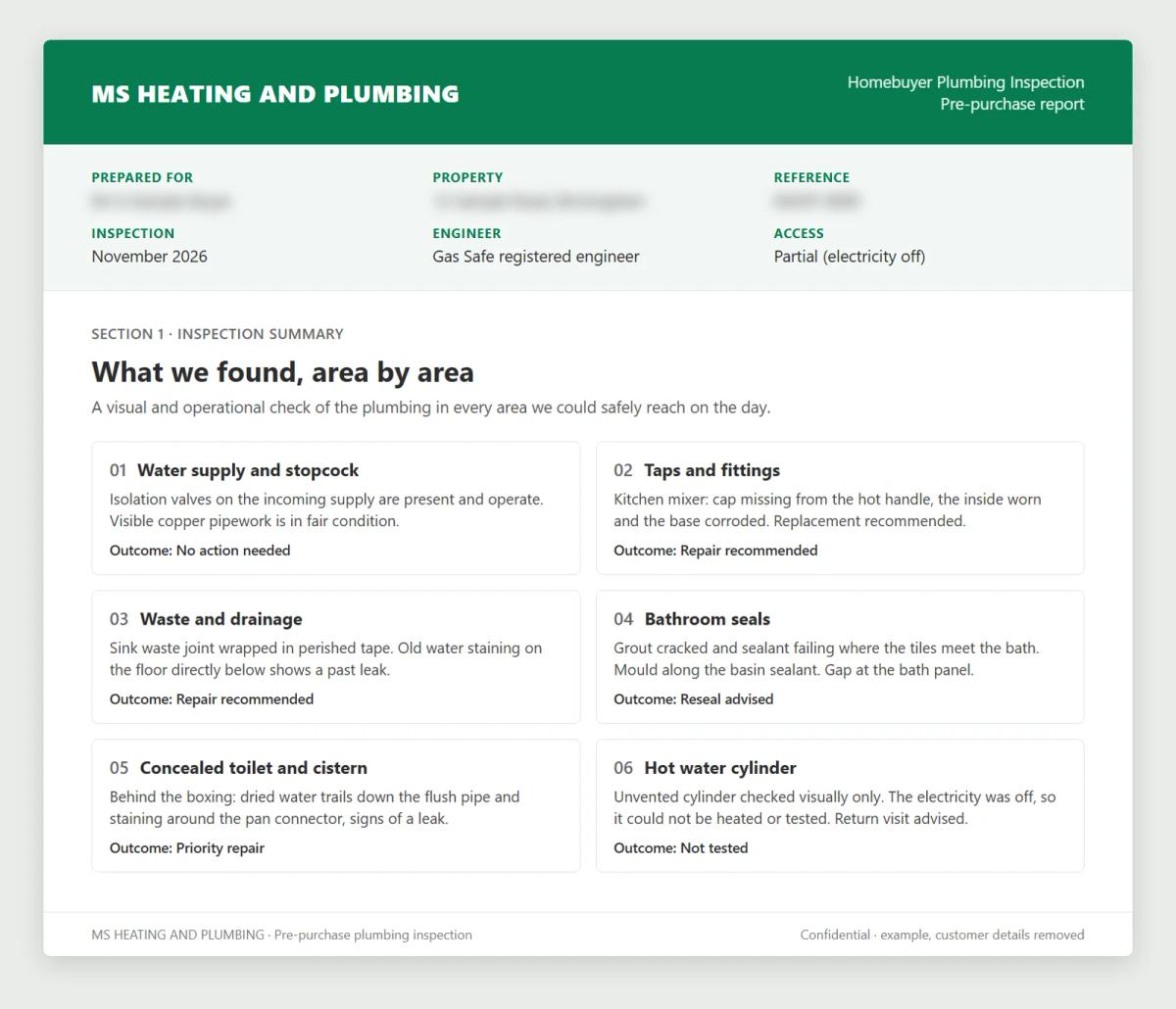

Read how buyers use a report like this in can you negotiate the house price after a survey?
Why it takes a specialist
A report is only as good as the inspection behind it. Spotting a slow leak behind boxing, a perished joint under a worktop or a cylinder that hasn’t been looked after takes experience, not just a quick look. Our engineers have over 29 years of plumbing and heating experience across Birmingham and Solihull, and years of specialist leak trace and access work behind them. Alongside a careful visual inspection, we use thermal imaging, leak detection equipment and moisture meters where they help, without opening anything up.
- Gas Safe registered engineers for every boiler and gas check
- Which? Trusted Trader, independently checked and reviewed
- Age UK Birmingham approved
Our engineers have been finding problems like these across Birmingham and Solihull for over 29 years. If you’ve found leaks in a home you already own, our leak trace and repair service can help. If you’re buying, have a look at our homebuyer inspection packages.