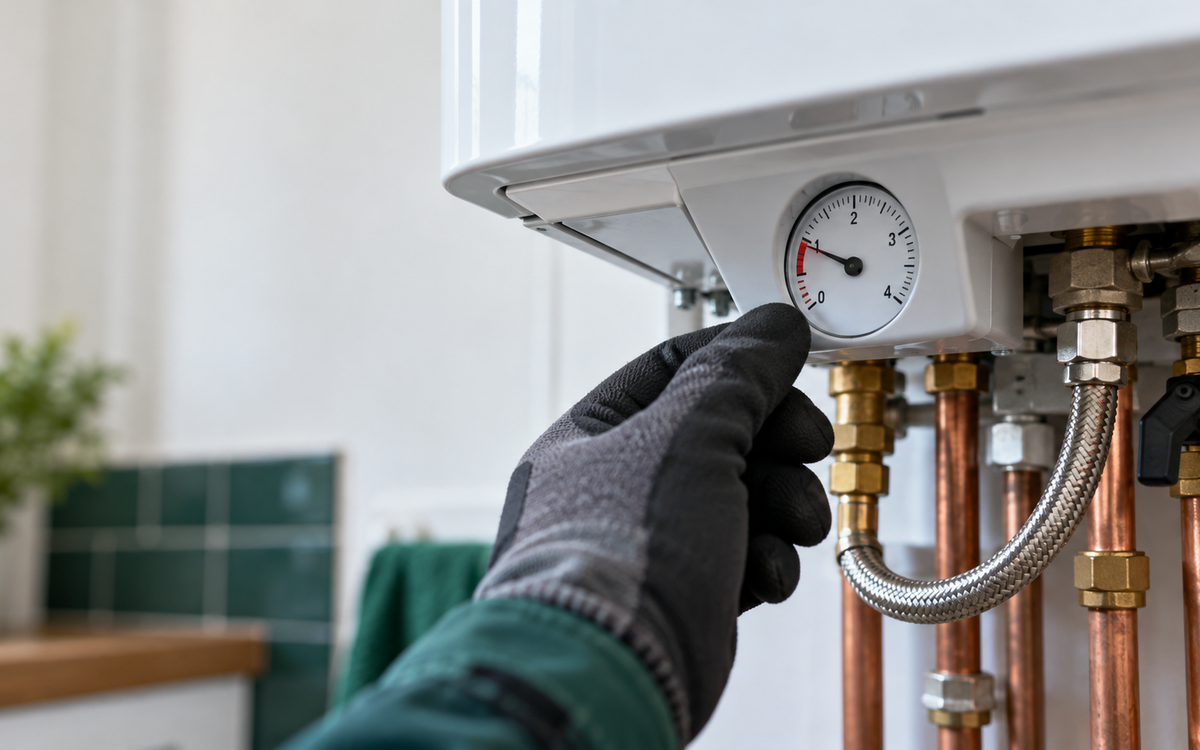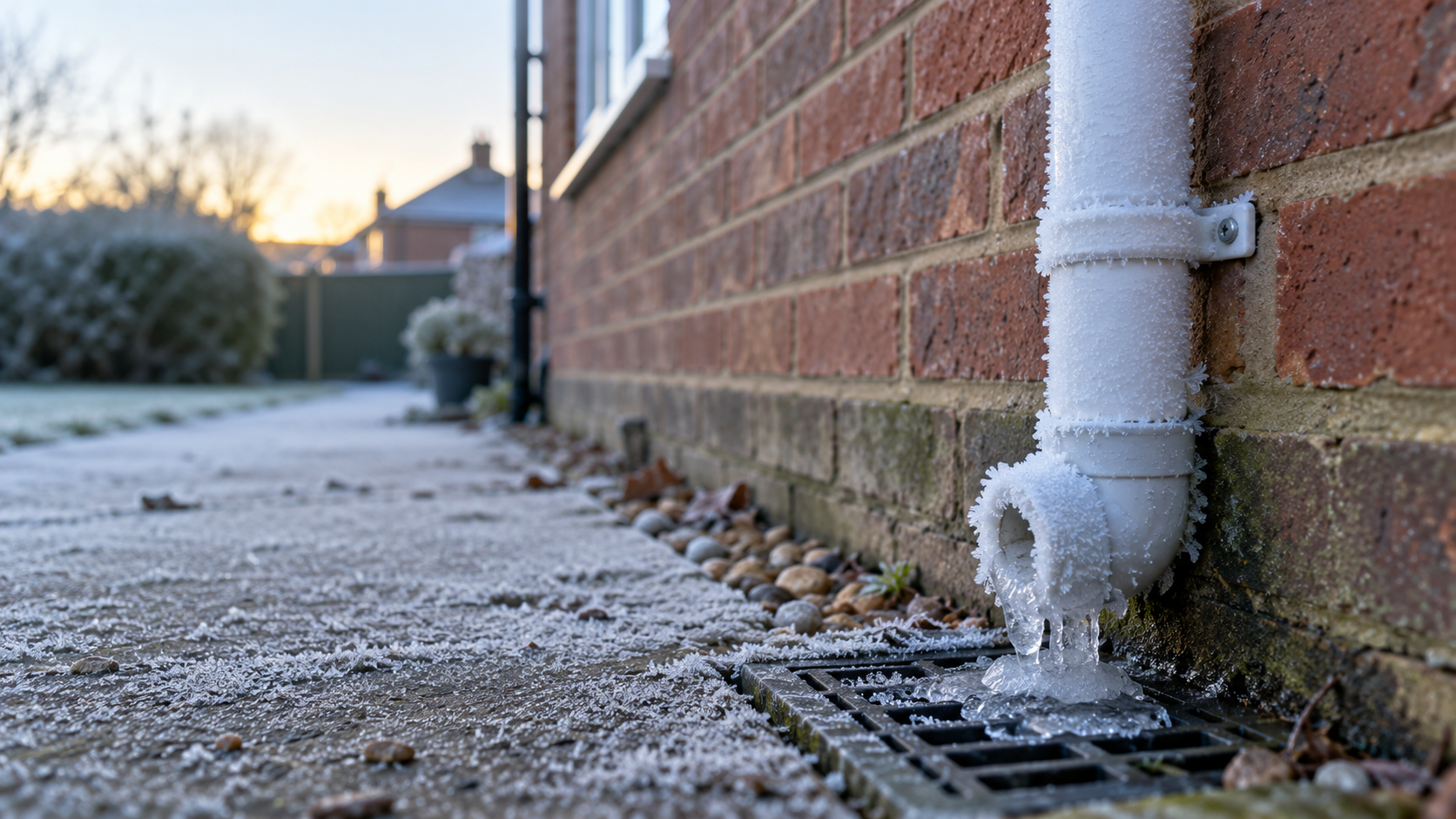
If your boiler stops working on a freezing morning, the most likely cause is a frozen condensate pipe. It’s one of the most common winter callouts we get, and the good news is that you can often fix it yourself in a few minutes. Below, we explain how to spot it, how to thaw it safely, and how to stop your water pipes freezing too.
What is a condensate pipe?
Modern condensing boilers produce a small amount of acidic water as they work. The condensate pipe carries this water away, usually through an outside wall and down to a drain. It’s normally a white or grey plastic pipe, about the width of a thumb.
Because the water inside only trickles out slowly, it can freeze when temperatures drop. Once the ice blocks the pipe, the water backs up into the boiler and the boiler shuts down to protect itself.
Signs your condensate pipe has frozen
- The boiler has stopped and won’t restart, usually during or after a cold snap
- You can hear a gurgling noise coming from the boiler
- The boiler display shows a fault code, often one that points to the condensate
- The pipe outside feels solid or you can see ice at the end
How to thaw a frozen condensate pipe safely
- Find the pipe. Follow the plastic pipe from the boiler to where it leaves the house and runs to the drain.
- Find the frozen section. The blockage is usually at the lowest point, a bend, or the open end near the drain.
- Pour warm water along it. Use a kettle of warm water, not boiling, poured slowly over the pipe. Boiling water can crack the plastic. A hot water bottle or a warm cloth held against the pipe also works.
- Reset the boiler. Once the ice has cleared, reset the boiler following your manual. It should fire up as normal.
Only do this where you can reach the pipe safely from the ground. Don’t climb ladders in icy conditions, and watch out for the water you pour freezing on paths and steps. If your pipe is high up or you can’t find it, ring us and we’ll talk you through it or send an engineer.
How to stop your pipes freezing this winter
Frozen water pipes are a bigger problem than a frozen condensate pipe, because ice expands and can split a pipe. You often don’t find out until it thaws and water starts pouring through a ceiling. A few simple steps make a real difference:
- Lag exposed pipes in lofts, garages, outbuildings and under floors using foam pipe insulation.
- Insulate outside taps with a cover, or turn them off at the isolating valve inside and drain them.
- Keep the heating on low when it’s very cold, even if you’re away. Many boilers have a frost setting for this.
- Fix dripping taps and overflows, as a slow drip can freeze and block a pipe.
- Know where your stopcock is and check it turns, so you can shut the water off quickly if a pipe bursts.
Your boiler installer can also help protect the condensate pipe itself, for example by insulating it, rerouting it inside, or fitting a wider pipe outside that is less likely to freeze.
What to do if a pipe bursts
Turn off the water at the stopcock straight away, switch off the electrics if water is near sockets or light fittings, and open your cold taps to drain the system. Then call us. Our engineers handle emergency plumbing across Birmingham and Solihull, including burst and frozen pipes.
When to call an engineer
Call us if the boiler still won’t work after thawing the pipe, if the pipe freezes again and again, or if you think a water pipe has split. A condensate pipe that keeps freezing may have been fitted with too long an outside run or too little fall, and it’s a simple job for our engineers to put right. We can also look at the boiler itself through our boiler repair service.
MS HEATING AND PLUMBING has been keeping homes warm for over 28 years. Our engineers are Gas Safe Registered, and we’re a Which? Trusted Trader, so you can trust the work is done safely and properly.