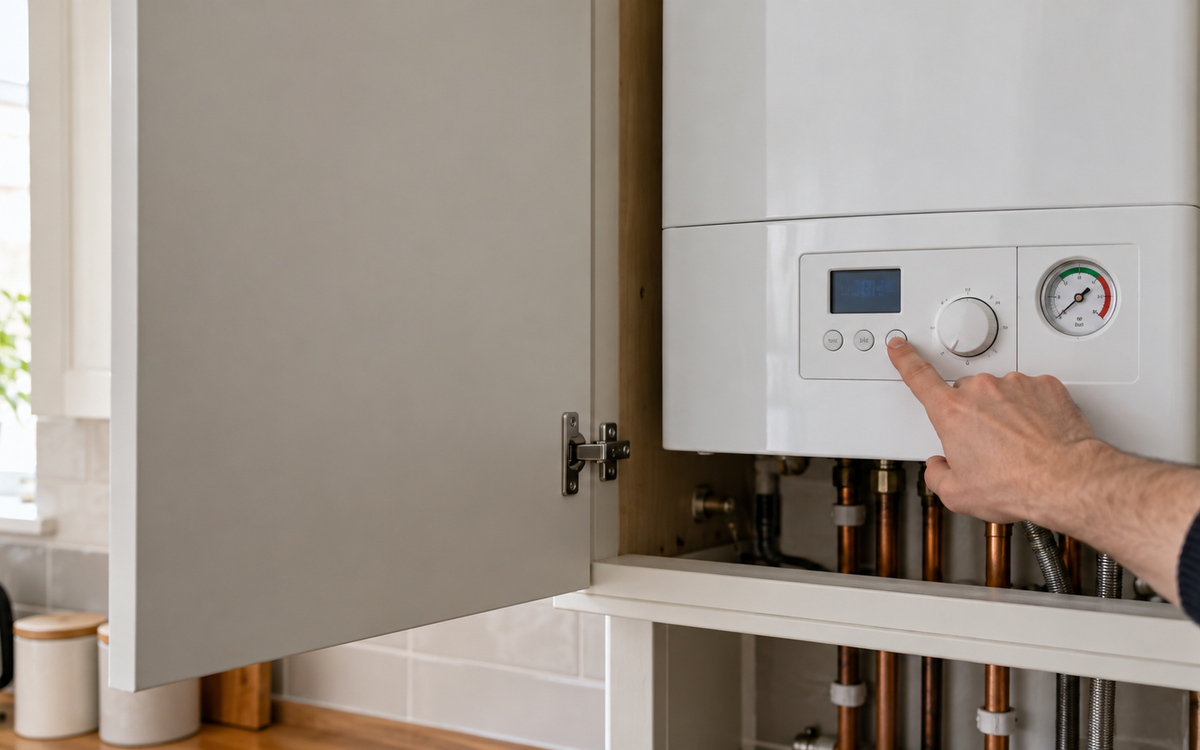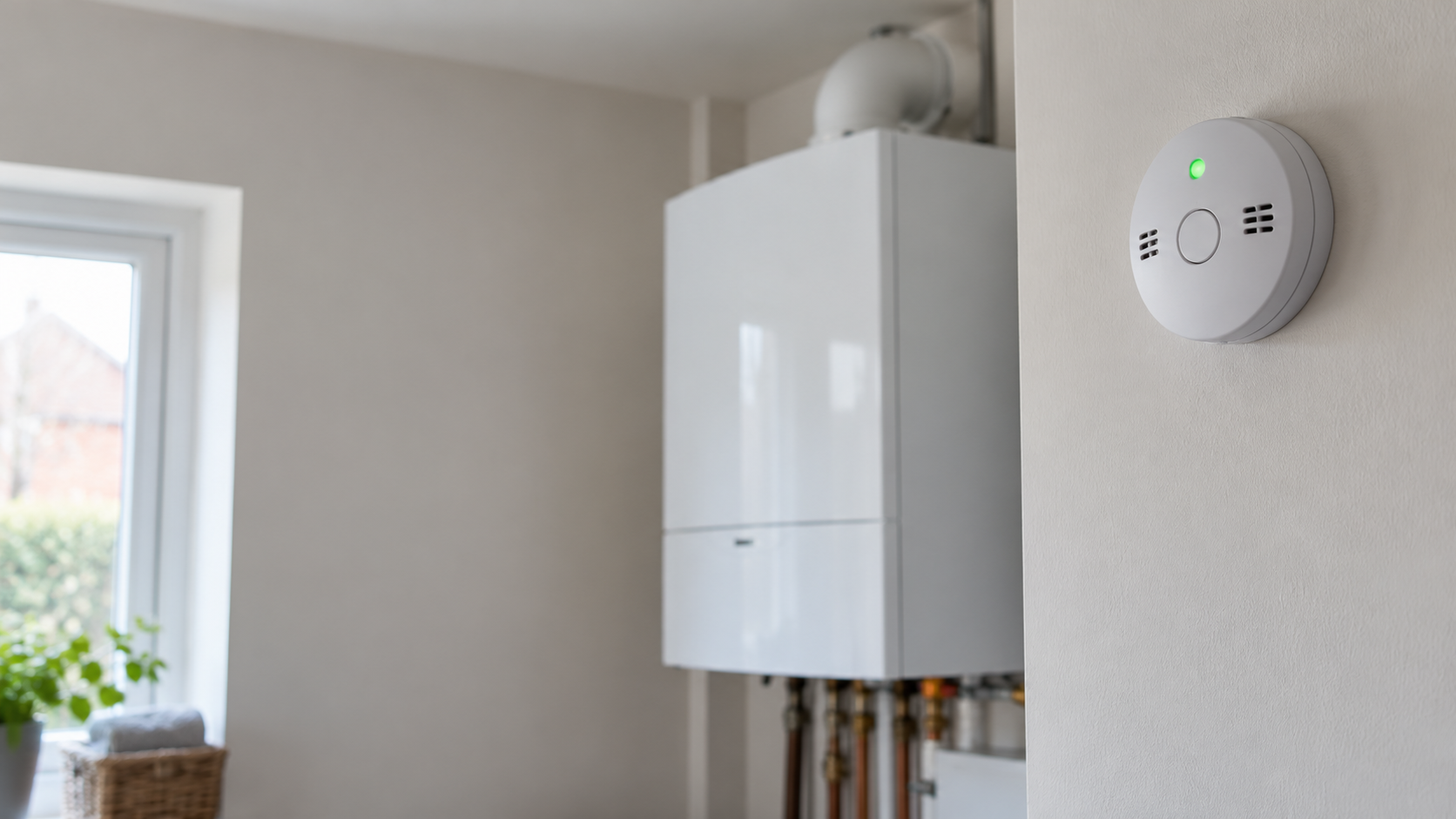
A carbon monoxide alarm should go in every room with a fuel-burning appliance, such as a gas boiler or gas fire, between 1 and 3 metres away from it. It’s also a good idea to have one in bedrooms and the rooms you spend most time in. Here’s how to place it properly, and what to do if it ever goes off.
Why carbon monoxide alarms matter
Carbon monoxide, or CO, is a poisonous gas with no colour, taste or smell. It can be produced when a gas, oil, coal or wood appliance doesn’t burn its fuel properly, often because it’s faulty, poorly maintained or badly ventilated. Without an alarm, you have no way of knowing it’s there.
Which rooms need a carbon monoxide alarm?
- Any room with a fuel-burning appliance, such as a boiler, gas fire, log burner or open fire.
- Bedrooms, so the alarm wakes you if CO builds up overnight.
- Rooms a flue passes through, for example a boiler flue running through a loft or bedroom.
- The rooms you spend most time in, such as the living room.
Exactly where to fit it
- 1 to 3 metres from the appliance. Too close and it can give false alarms. Too far and it may not pick up CO early enough.
- High up. On the ceiling, fit it at least 300mm from any wall. On a wall, fit it above the height of any door or window, but at least 150mm below the ceiling. Always follow the instructions that come with your alarm, as models vary.
- Away from corners and obstructions. Keep it clear of light fittings and furniture, so air can reach it.
- If the boiler is in a cupboard, fit the alarm in the room just outside the cupboard.
Where not to put a carbon monoxide alarm
- Inside a cupboard or behind furniture or curtains
- Directly above a sink, cooker or anything that gives off steam
- Next to a window, door, extractor fan or air vent
- In damp areas such as bathrooms, unless the alarm says it’s suitable
Choosing and testing your alarm
Buy an alarm that meets British Standard BS EN 50291 and carries the Kitemark, from a reputable shop. Test it once a month using the test button, and check the expiry date, as most alarms only last a set number of years. A carbon monoxide alarm is not a replacement for a smoke alarm. You need both.
Know the symptoms of CO poisoning
Early signs can feel like flu, but without a high temperature: headaches, dizziness, nausea, tiredness and breathlessness. A clue is that symptoms ease when you’re away from home and come back when you return, or that other people or pets in the house feel unwell too.
What to do if your alarm goes off
- Open doors and windows straight away.
- Turn off fuel-burning appliances if you can, and get everyone outside into fresh air.
- Call the National Gas Emergency Service on 0800 111 999.
- Seek medical help if anyone feels unwell.
- Don’t use the appliance again until a Gas Safe registered engineer has checked it.
Landlords: the law
In England, landlords must fit a carbon monoxide alarm in any room used as living accommodation that has a fixed fuel-burning appliance, not including gas cookers. Together with a yearly gas safety certificate, it’s a key part of keeping tenants safe.
Prevention is the best protection
An alarm warns you about CO, but a well-maintained appliance stops it being produced in the first place. A yearly boiler service lets our engineers check your boiler is burning safely and the flue is working properly.
MS HEATING AND PLUMBING has been keeping homes across Birmingham and Solihull safe for over 28 years. Our engineers are Gas Safe Registered, and we’re a Which? Trusted Trader.