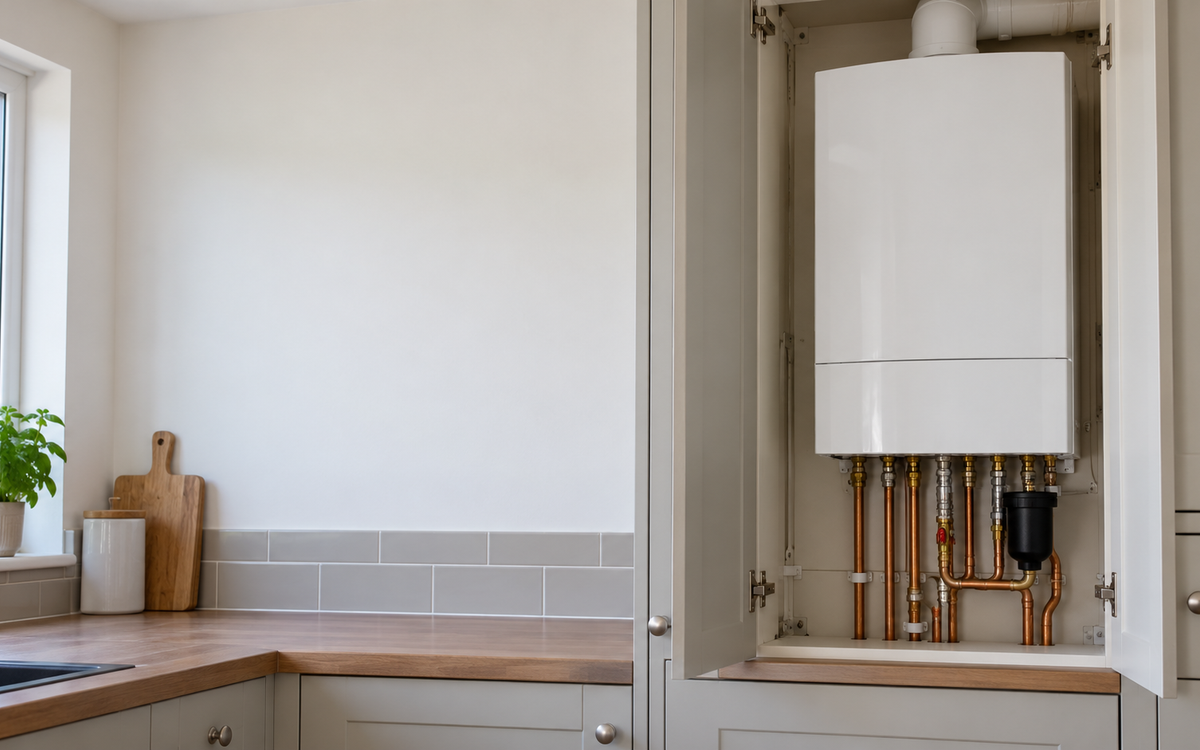
Short answer: a house survey looks at the boiler and plumbing, but it doesn’t test them. Whether you’ve had a Level 2 or a Level 3 survey, the surveyor checks what they can see, then often recommends a specialist where something needs a closer look. That recommendation is where we come in.
What a surveyor checks, and what they don’t
Surveyors are trained to spot problems across the whole building: the roof, walls, damp, windows and services. With the heating and plumbing, they’ll note the age and type of boiler if they can, look for visible leaks and damp, and flag anything that looks out of date or badly fitted.
What they won’t usually do is test anything. On a typical survey they won’t:
- fire up the boiler and check it’s burning safely
- run every tap, fill and drain every sink and bath, and flush every toilet
- check the water flow and pressure around the house
- open boxing, bath panels or access hatches to look at hidden pipework
- check the safety valves on a hot water cylinder
That’s not a criticism of surveyors. Their report covers the whole house in a few hours. Testing the plumbing and heating properly is a job for an engineer.
When the survey says “further investigation recommended”
This is the line buyers ask us about most. It means the surveyor saw something they couldn’t rule in or out without a specialist. It might be staining under a sink, an old boiler, a damp patch near the bathroom or a hot water cylinder they couldn’t assess.
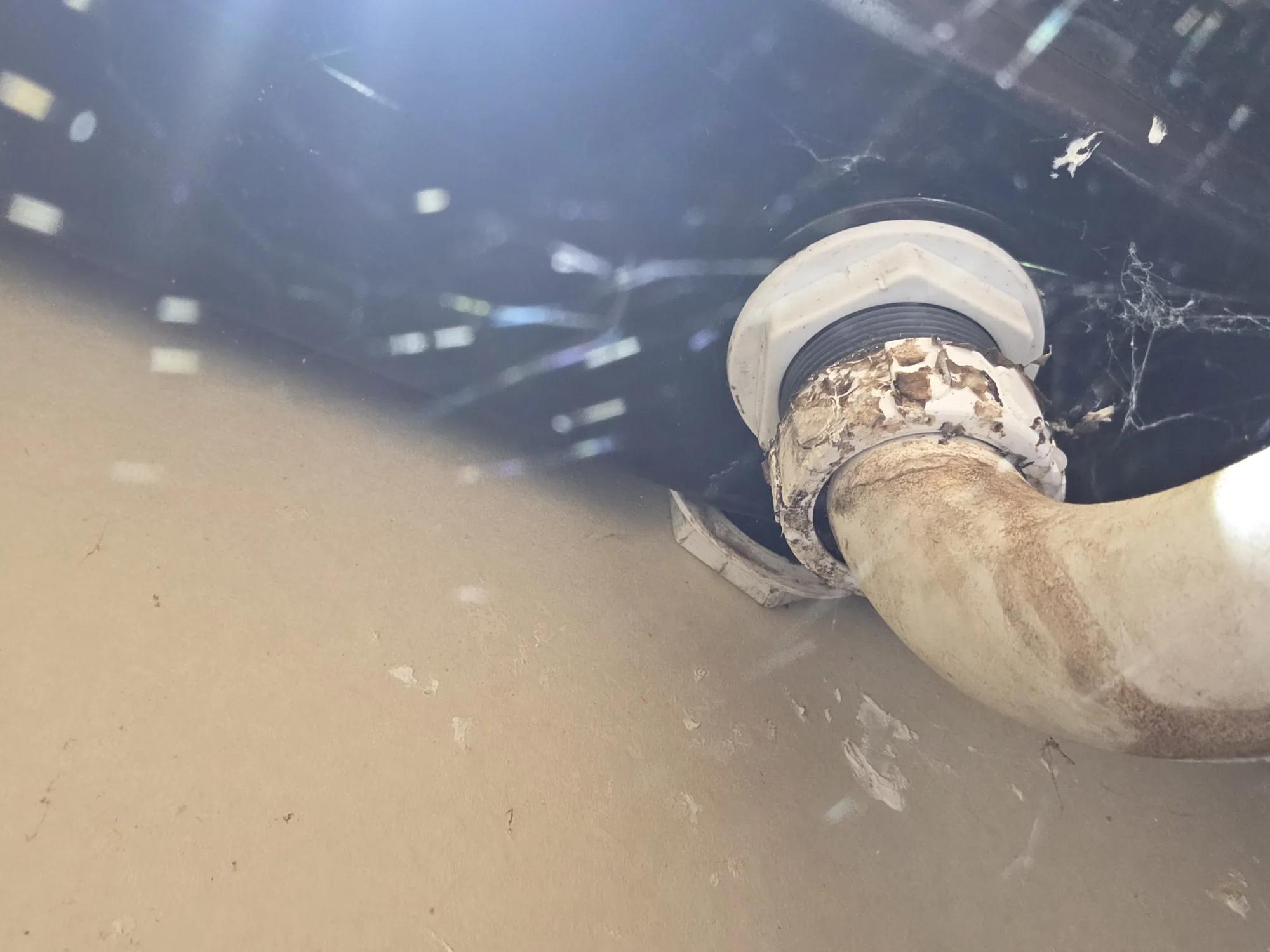
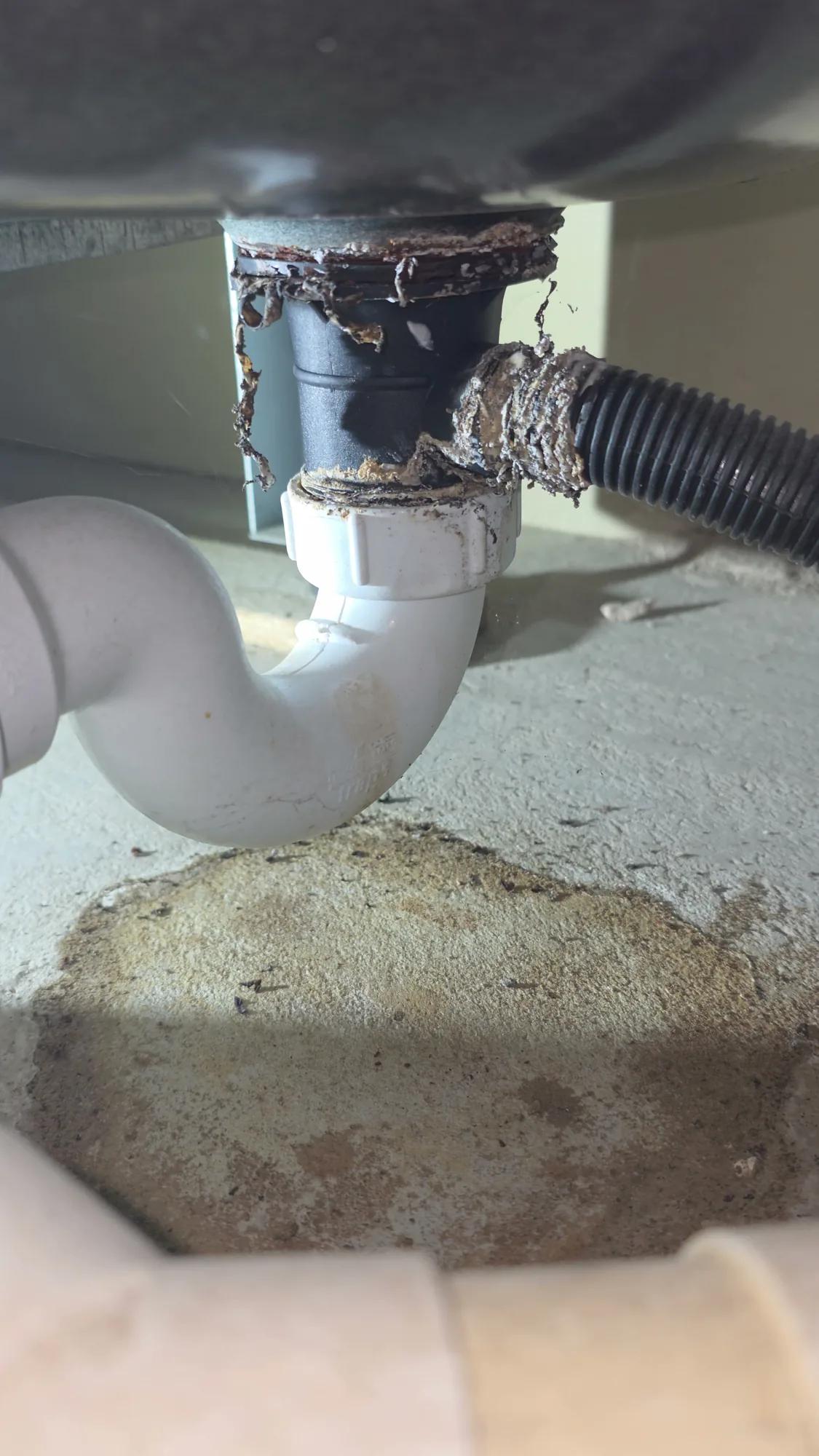
That’s exactly how one recent inspection started. The surveyor told the buyer to have the plumbing looked at before going ahead, and the buyer found us online and booked a plumbing inspection. Behind the boxing around the toilet we found dried water trails down the flush pipe, and under a sink we found an old water stain on the floor directly below a perished waste joint. None of it was visible from the room.
What our inspection adds
Our engineers test the systems the survey could only look at. Depending on the package you choose, that covers:
- The boiler: a Gas Safe registered engineer checks its safety, condition and performance.
- The plumbing: every tap, sink, bath, shower and toilet is run and checked, along with the water flow, the drains, the visible pipework and the seals.
- Hidden areas: where it’s safe and the seller allows it, we look behind bath panels, boxing and access hatches without damaging anything.
- A written report: what we found, with photos, and what needs doing.
You can compare the three options on our homebuyer inspection packages page.
What we need on the day
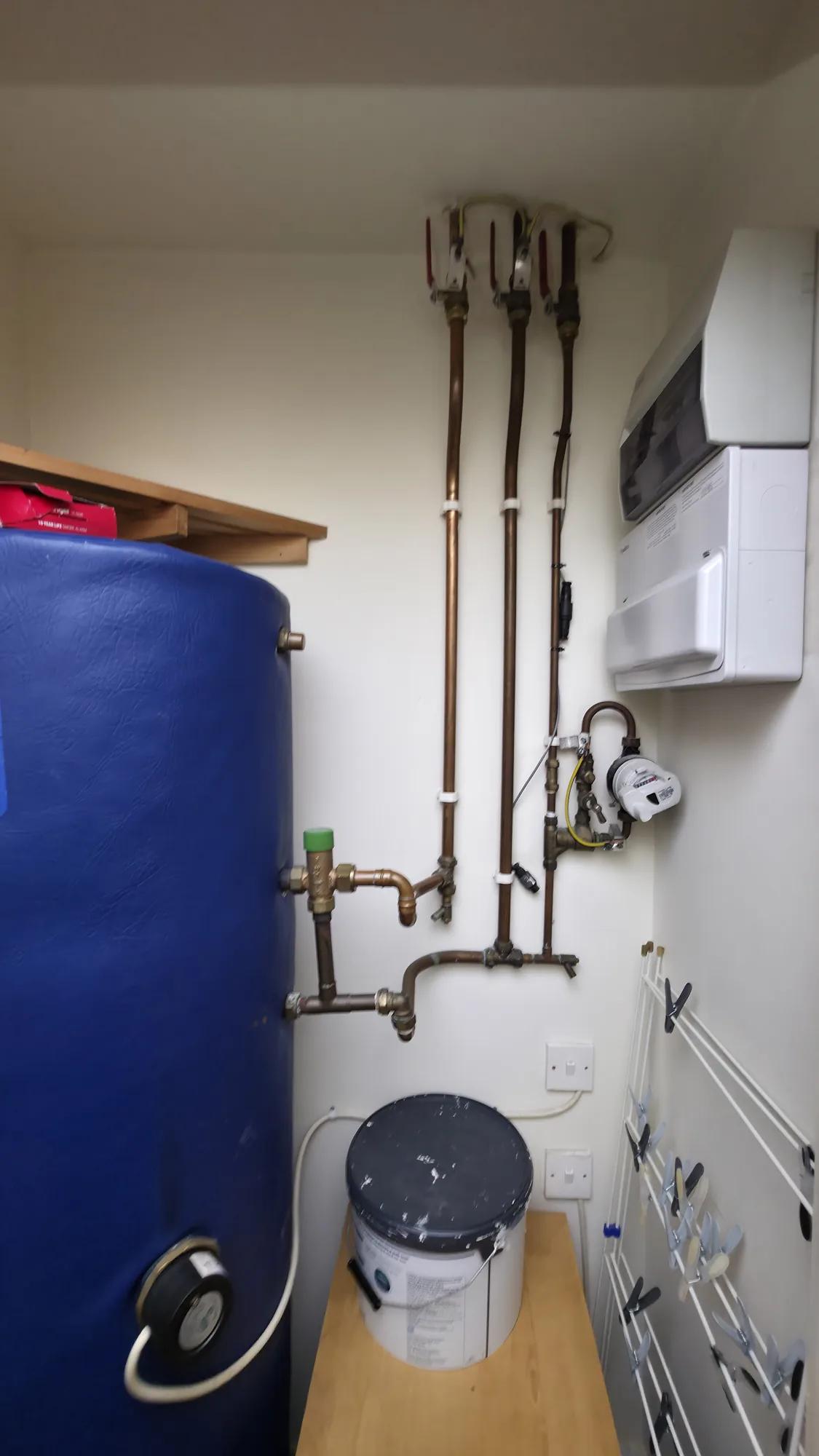
An inspection can only test what’s switched on. On one recent visit the electricity was off at the property, so we couldn’t test the hot water cylinder. It meant the buyer had to wait for a second visit to get an answer on it.
Before we arrive, please check with the estate agent that:
- the water, gas and electricity are all on
- the boiler and hot water cylinder are working, or you know they’re not
- we can get to the boiler, the cylinder, the stopcock and any access panels
- someone will be there to let us in
Do you need both a survey and an inspection?
For most buyers, yes. The survey tells you about the building as a whole. Our inspection goes deeper on the heating and plumbing, which are among the most expensive things to put right after you move in. With over 29 years of experience across Birmingham and Solihull, our engineers know the problems these homes tend to hide.