How to find a water leak in your house, and how we find hidden leaks
The quickest way to find out if you have a water leak is the water meter test: turn off every tap and appliance, take a meter reading, wait an hour without using water, and read it again. If the number has gone up, water is escaping somewhere. Damp patches, a higher water bill or the sound of running water with the taps off are other signs. Leaks inside walls and under floors are harder to find, and that’s where professional leak detection comes in.
Signs you may have a water leak
A water bill that’s higher than usual, with no change in how you use water
Damp patches, bubbling paint or peeling wallpaper
Mould or a musty smell in one spot
The sound of running or dripping water when everything is off
Lower water pressure than normal
Warm patches on a floor, which can mean a leaking heating pipe underneath
A boiler that keeps losing pressure, which points to a leak in the heating system
How to check for a water leak with your meter
Turn off every tap, and make sure the washing machine, dishwasher and toilets aren’t filling.
Find your water meter. It’s usually under a small cover in the pavement or front garden, or indoors near the stopcock.
Write down the reading, or watch the small dial or red indicator if it has one.
Don’t use any water for an hour, then read the meter again.
If the reading has changed, or the indicator is turning, you have a leak.
To narrow it down, turn off the water at your stopcock and check the meter again. If it’s still moving, the leak is on the supply pipe between the meter and the house. Contact your water supplier, as some help with supply pipe leaks. If it stops, the leak is inside your home. See where is my stopcock if you need to find it.
No meter? With everything turned off, listen at the stopcock and along any pipes you can reach. A hiss or trickle means water is still flowing.
Where leaks usually are
Under the kitchen sink and behind the washing machine or dishwasher
Around the shower tray, bath and toilet, where seals and connectors wear
Pipes in the loft, garage and outside walls, especially after frost
Under floors and inside walls, where you can’t see them
If water is already coming through a ceiling, see our guide to water leaking through the ceiling.
How we find hidden leaks
When a leak is behind a wall or under a floor, guessing means lifting floorboards and knocking holes until you find it. Our engineers use specialist equipment to pinpoint it first:
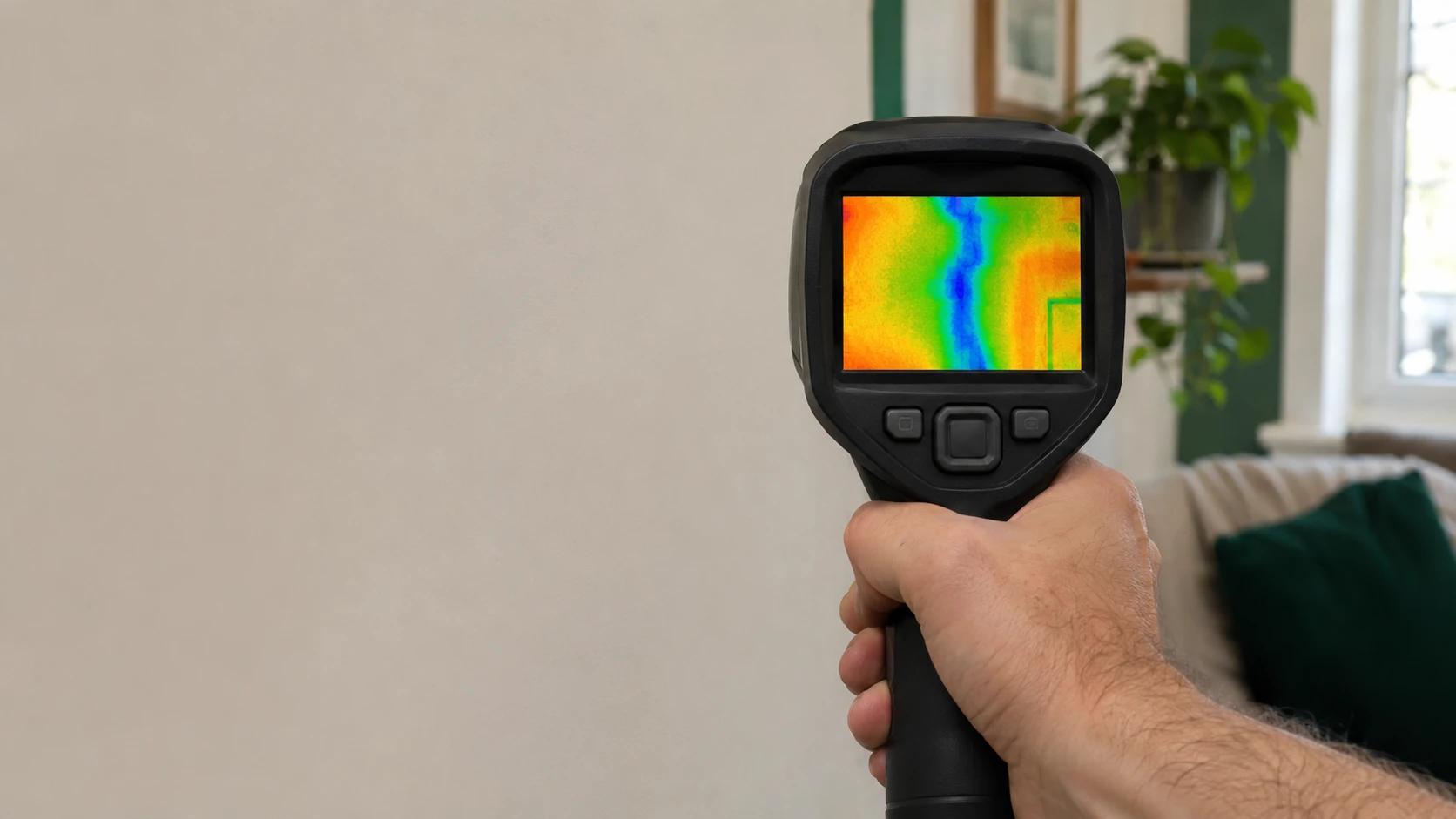
Thermal imaging shows the temperature differences a leaking pipe makes, especially hot water and heating pipes.
Acoustic leak detection uses sensitive microphones to hear water escaping from a pipe under pressure.
Tracer gas is a safe gas put into the pipe. It escapes at the leak, and a detector picks it up at the surface.
Moisture meters measure how wet walls and floors are, to follow the damp back to its source.
Pressure testing shows whether a pipe or system is holding water, and which part is losing it.
Once we’ve found the leak, we open up only where we need to, so the damage to your floors and walls is as small as possible. Our leak detection and repair service finds and fixes the leak in one go. For leaks in the heating, see our central heating leak detection.
Wondering about the cost and whether your insurance will pay? Our guide to how much leak detection costs covers both.
MS HEATING AND PLUMBING has been finding and fixing leaks across Birmingham and Solihull for over 29 years. We’re a Which? Trusted Trader and Age UK Birmingham approved, so you can trust us in your home.
Frequently asked questions
How can I tell if I have a water leak?
Do the water meter test: turn everything off, take a reading, wait an hour and read it again. Other signs are a higher bill, damp patches, mould and the sound of running water.
How do plumbers find hidden leaks?
With thermal imaging, acoustic listening, tracer gas, moisture meters and pressure testing. These pinpoint the leak so only a small area needs opening up.
Can a water leak be found without damaging walls or floors?
The leak itself can usually be found without damage. We then open up only the small area where the pipe needs repairing.
What if my meter shows a leak but I can’t see any water?
The leak may be under a floor, inside a wall or on the supply pipe outside. Turn off the stopcock and check the meter again to tell which.
Who is responsible for a leak on the supply pipe?
Usually the homeowner, for the pipe between the boundary and the house. Contact your water supplier first, as some help find or repair supply pipe leaks.
Think you have a hidden leak?
Send us photos on WhatsApp of any damp patches and your water meter reading. If water is pouring out, turn off the stopcock and give us a call on 0121 709 0000.
Boiler leaking water: what to do and what it means
A leaking boiler needs turning off and checking quickly. Here’s what to do straight away, what usually causes the leak, and when to call an engineer.