Radiator cold at the bottom or the top: what it means
What a cold patch on a radiator is telling you
Where a radiator is cold tells you a lot about what’s wrong. Cold at the top and warm at the bottom usually means trapped air, which you can often fix yourself by bleeding it. Warm at the top and cold at the bottom usually means sludge has built up inside, which needs cleaning out. Here’s how to check, and what to do in each case.
How to check your radiators
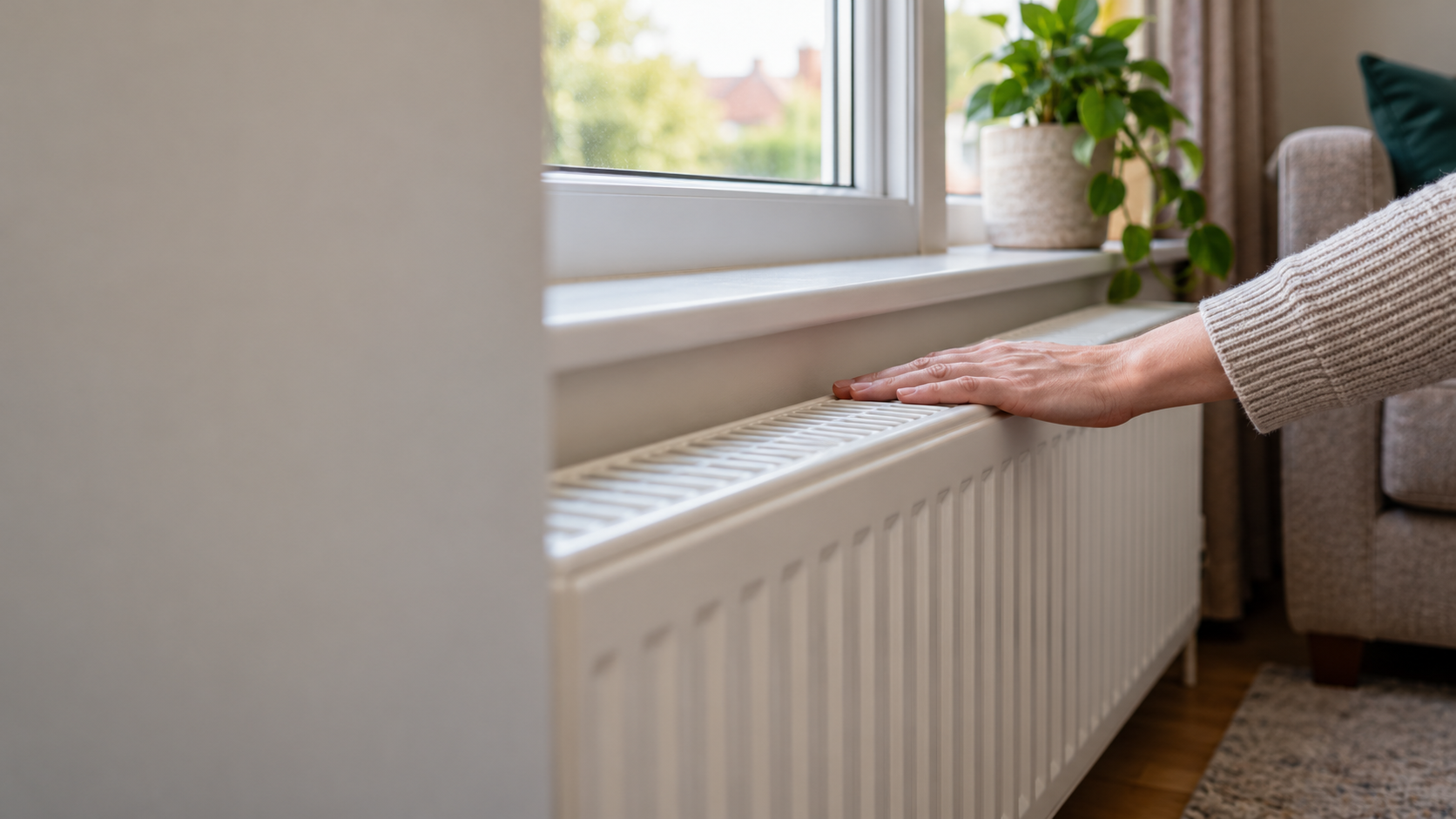
Put the heating on and give it 15 to 20 minutes to warm up. Then carefully run your hand over each radiator, from top to bottom and side to side. Take care, as radiators can get very hot. Make a note of which radiators have cold patches and where.
Radiator cold at the top: trapped air
Air rises, so when it gets into a heating system it collects at the top of the radiator and stops hot water filling it. You might also hear gurgling or ticking noises. Bleeding the radiator lets the air out.
How to bleed a radiator
Turn the heating off and let the radiators cool down.
Find the bleed valve, a small square fitting at one of the top corners.
Hold a cloth underneath and use a radiator key to turn the valve a quarter turn anticlockwise.
You’ll hear a hiss as air escapes. As soon as water starts to come out, close the valve again.
Check your boiler pressure gauge. Bleeding lets some pressure out, so you may need to top it back up using the filling loop, following your boiler manual.
If a radiator needs bleeding every few weeks, air is getting into the system somewhere, which is worth getting checked.
Radiator cold at the bottom: sludge
Over time, the water in your heating system reacts with the metal inside the pipes and radiators. This creates a black, muddy sludge, known as magnetite. Because it’s heavy, it settles at the bottom of radiators and blocks the flow of hot water.
Bleeding won’t help with this. Signs that sludge is the problem include:
Cold patches along the bottom or in the middle of radiators
Black or dark brown water when you bleed a radiator
Radiators that take a long time to warm up
A boiler that’s noisy or keeps breaking down
The fix is to clean the system. A power flush pumps water and cleaning chemicals through the pipes and radiators at high speed to clear out the sludge. Afterwards, we usually recommend a magnetic filter, which catches new sludge before it can build up again and protects your boiler.
Other cold radiator problems
Whole radiator cold: check the valves at each end are open. If it has a thermostatic valve, the pin inside can get stuck, especially after the summer.
Radiators furthest from the boiler are cooler: the system may need balancing, so hot water reaches every radiator evenly.
All the upstairs radiators are cold: this can point to a problem with the pump or, on older systems, the water tank in the loft.
When to call an engineer
Give us a call if bleeding doesn’t fix a cold top, if you see dark water or cold bottoms, or if several radiators are struggling. Our engineers handle central heating repairs across Birmingham and Solihull, from sticking valves to full system cleans.
MS HEATING AND PLUMBING has been looking after heating systems for over 29 years. Our engineers are Gas Safe Registered, and we’re a Which? Trusted Trader.
Frequently asked questions
Why is my radiator cold at the top?
Usually because air is trapped inside. Air rises and collects at the top, stopping hot water filling the radiator. Bleeding the radiator lets the air out.
Why is my radiator cold at the bottom?
Usually because sludge has built up inside. It’s heavy, so it settles at the bottom and blocks the flow of hot water. Bleeding won’t fix it, but a power flush will.
Do I need to top up my boiler pressure after bleeding radiators?
Often, yes. Bleeding lets some pressure out of a sealed system, so check the gauge afterwards and top it up using the filling loop if it’s below the level in your manual.
What is a power flush?
A power flush pumps water and cleaning chemicals through your pipes and radiators at high speed to clear out sludge. It helps radiators heat up properly and protects your boiler.
How do I stop sludge coming back?
A magnetic filter fitted on your heating system catches sludge before it can build up again. A yearly boiler service and inhibitor in the system water help too.
Get your radiators working properly
For a quote on a power flush or new radiators, send us photos on WhatsApp of the cold radiators and your boiler. If your heating has stopped working, give us a call on 0121 709 0000 and we’ll help you get warm again.
Frozen condensate pipe and frozen pipes: what to do
Boiler stopped in the cold? It’s often a frozen condensate pipe. How to thaw it safely, and how to stop your water pipes freezing this winter.